Eleven steps. That’s the official roadmap Experian gives anyone trying to fix their credit through sheer willpower and a mountain of paperwork.
Most people don’t start with a structured plan. They start with a rejection letter for a car loan or a sudden, jarring jump in interest rates that makes their monthly budget look like a math error. It’s a visceral experience. One moment you’re a responsible adult, and the next, you’re staring at a three-digit number that feels like a personal insult.
The instinct is to find a professional. We see ads for firms that promise to wipe the slate clean by Tuesday afternoon. It feels like an easy out for a problem that feels permanent. But the credit repair industry is usually a messy mix of legitimate help and predatory nonsense.
I’ve seen people pay thousands to firms that essentially do nothing more than what you can do yourself for free. They send the same dispute letters you would write, just on fancier stationery. It’s a cynical business model built on the desperation of people who are tired of being told “no” by banks.
The Industry’s Double-Edged Sword
If you decide to go the professional route, you’ll find a wide range of quality. On one end, there are companies that actually provide value through specialized software and aggressive dispute management. On the other, there are the scammers who leave you in a worse position than when you started.
Money Magazine recently evaluated the market, noting that Credit Saint is the best credit repair company for people looking for comprehensive plans and clear pricing policies. This kind of transparency is rare. Most legitimate players focus on structured, predictable costs rather than the vague “we’ll see what we can do” estimates that characterize the bad actors.
Then there’s the middle ground. Companies like CreditRepair.com have built a following by focusing on the granular details. Users often cite their ability to target specific issues like derogatory marks or hard inquiries as a primary reason for their satisfaction. It’s less about “magic” and more about the tedious work of cleaning up data errors.
But the risk remains high. The Federal Trade Commission is quite blunt on this point: Anything a credit repair company can do legally, you’ll be able to do for yourself for little or no cost. If a company tells you they can remove accurate, negative information, they are lying. They cannot. No one can.
Take David, a man we spoke to. He was facing a 580 score that prevented him from renting an apartment in a competitive market. He paid a “specialist” $1,500 who promised to delete his late payments. The only thing the specialist deleted was David’s savings account balance. The late payments stayed, and the “specialist” vanished after three months of automated emails.
Before you hand over a credit card, you should check rates and compare the actual cost of professional help against the time you might spend doing it yourself. It is a math problem more than a magic trick.
The Good, The Bad, and The Transparent
Not all firms are out for blood. Some have carved out niches that make them worth the investment for those with particularly complex files. It’s helpful to categorize them by what they actually provide rather than what their brochures claim.
If you want a company that prioritizes clarity in how they bill you, look for transparency. If you are dealing with errors that require constant fighting, you might need a specialist in dispute services. It is a nuanced market, and picking the wrong tool for the job is a common mistake.
| Company Category | Primary Benefit | Common Use Case |
|---|---|---|
| Best Overall | Comprehensive management | General score improvement |
| Best for Transparency | Clear pricing and expectations | Users wary of hidden fees |
| Best for Dispute Services | Aggressive error correction | Incorrect derogatory marks |
| Best for Additional Services | Beyond just score repair | Long-term financial planning |
For instance, CreditFirm.net has been noted for its transparency, which is a breath of fresh air in an industry known for fine print. Meanwhile, The Credit People focus on the heavy lifting of disputes, which is what most people actually need if they have a messy history of collections or judgments.
The Credit Pros tend to offer more than just a single fix; they aim at the broader financial picture. This is a different approach entirely. They aren’t just looking at the number; they are looking at the habits that created the number in the first place. It is a longer, more expensive path, but often a more permanent one.
But don’t mistake “additional services” for “guaranteed results.” Even the best firm is ultimately at the mercy of the credit bureaus’ reporting accuracy and the laws governing them. They are facilitators, not kings of the credit system.
Avoiding the Red Flags of Fraud
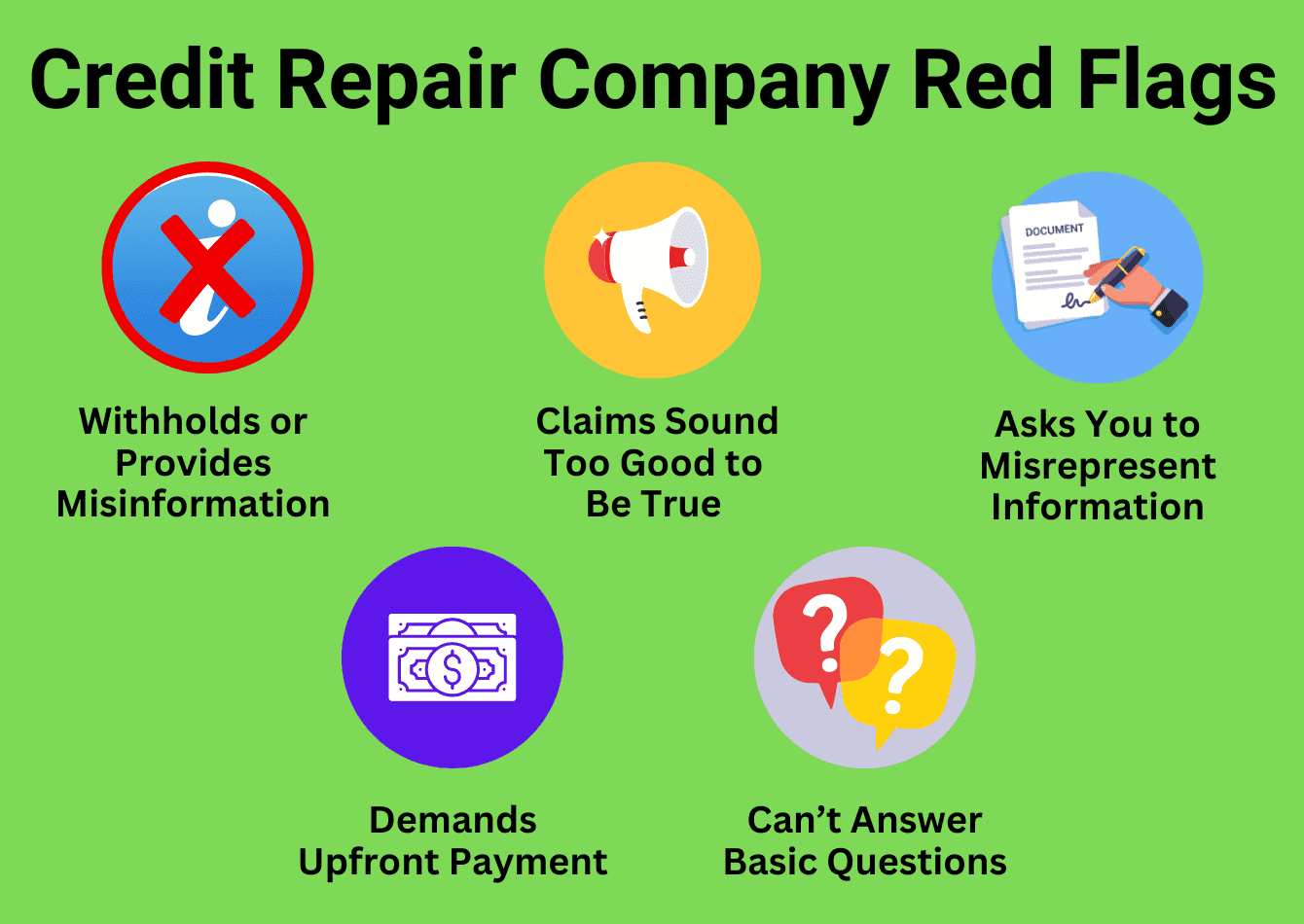
Scams in this space are not just annoying; they can be legally damaging. If a company tells you they can remove accurate negative information from your report, walk away immediately. It is a physical impossibility under the Fair Credit Reporting Act. If they claim they can “wipe” your debt, they are setting you up for a disappointment.
There are other, more subtle warning signs. Be wary of any company that asks for a fee before they have performed any actual service. This is actually illegal. The Credit Repair Organizations Act requires companies to complete their initial service before they can demand payment. If they ask for an upfront “setup fee” via a wire transfer or a gift card, you are being robbed.
Another red flag is the “guarantee.” No one can guarantee a specific score increase. Scores are determined by complex algorithms and the behavior of lenders, not just the absence of errors. A company that promises you a 700 score in sixty days is selling a fantasy. They are betting that you will get frustrated and quit before you realize the fraud.
Watch out for these common tactics:
- Demanding payment via unconventional methods like Western Union.
- Telling you to stop communicating with your creditors.
- Claiming they have “insider connections” with Equifax or Experian.
- Threatening you with legal action if you cancel your contract.
- Promising that they can remove “all negative items” regardless of accuracy.
It is a predatory environment because the customers are often in a state of panic. When you are being denied a mortgage or a job because of a score, your logical reasoning can take a backseat to your need for a quick fix. Scammers rely on that cognitive slip.
The DIY Reality Check
The most effective way to fix your credit is often the most boring. It involves the “11 steps” mentioned by Experian, which largely boil down to: check your reports, dispute errors, pay your bills on time, and lower your credit utilization. It is a slow, grinding process that requires discipline rather than a subscription service.
Most people think they need a professional to handle the “dispute” part. However, the dispute process is designed to be accessible to the consumer. You can go to the websites of Equifax, Experian, and TransUnion and file a dispute for free. You simply state what is wrong and provide evidence. It is not a secret science.
The real value of a service usually comes when you have a massive volume of errors or a history of complex legal disputes that require constant monitoring. If you have one wrong medical bill on your report, a credit repair company is a waste of your money. If you have twenty different collections from different agencies, their automation might be worth the cost.
We should also consider the psychological cost. When you hire someone to “fix” your life, you often fail to address the behavior that caused the damage. If you fix your score to 720 but continue to carry high balances and miss payments, you will be right back in the 500s within six months. The number is just a reflection of your financial relationship with debt.
It is worth investigating your own data before you pay someone else to do it. Grab your reports from AnnualCreditReport.com. Look through every single entry. If you see something that is clearly wrong, a debt that isn’t yours or a late payment that was actually on time, file the dispute yourself. It is free, it is legal, and it is the fastest way to see if a professional service is actually necessary for your specific situation.
Credit repair is a tool, not a cure. It can help clean up the wreckage of past mistakes, but it cannot build a stable financial future on its own. Whether you hire a professional or do the work yourself, the end goal is the same: a clean, accurate report that reflects your true financial standing. Don’t let the desire for a quick fix lead you into the hands of someone who will only make your situation worse.